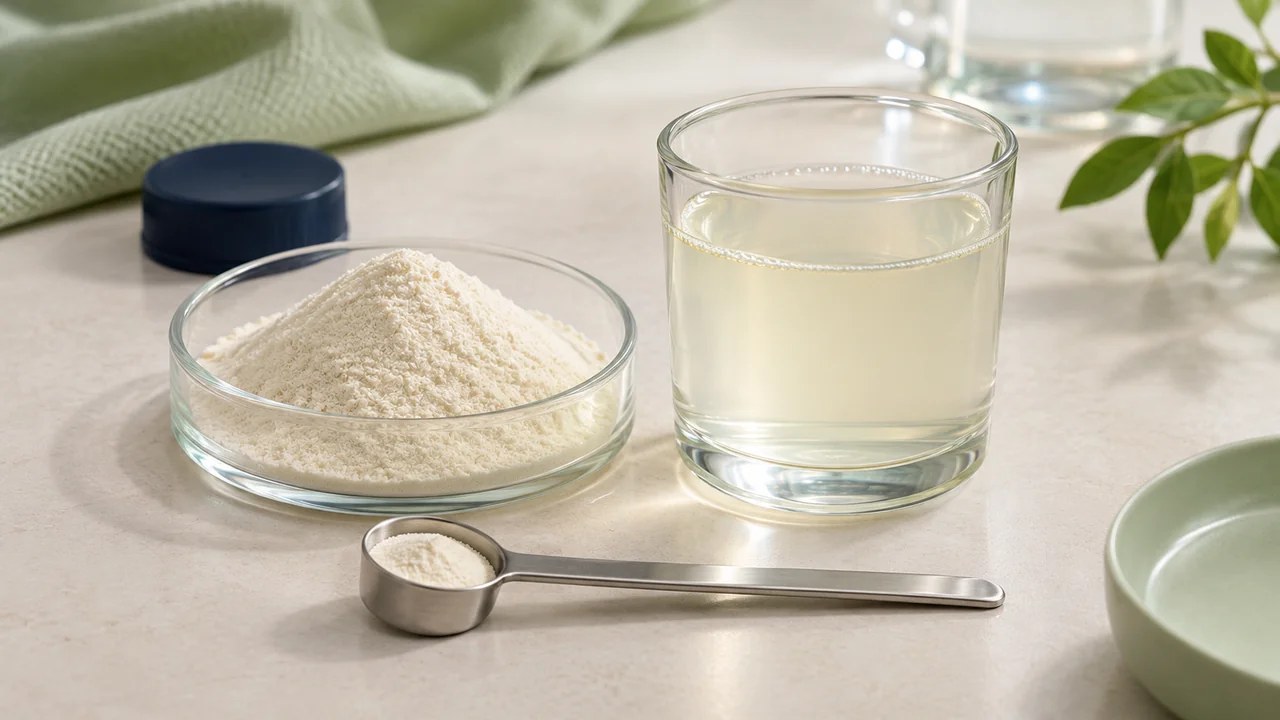
For a powdered drink, shortlist fish collagen peptides by source, protein content and how the sample performs in your beverage. Ask the supplier for the offered lot’s certificate of analysis (COA), a source and allergen declaration, and the reporting basis for protein. Then compare samples using the same dry mix and the preparation method you expect customers to use.
What to check before ordering a sample
| Ask for | Why it matters for a drink mix |
|---|---|
| Fish species, source material and allergen statement | Helps your team evaluate the ingredient and prepare its label and supplier approval file |
| Protein result, method and reporting basis | Lets you compare offers expressed on the same basis |
| Molecular-weight metric, units and method | Clarifies what the supplier measured and whether two descriptions refer to the same metric |
| Appearance, sensory notes and offered lot COA | Gives your lab a reference when the sample arrives |
| Bulk pack size, minimum order and lead time | Helps estimate the cost and timing of the first production run |
BIOF’s public marine fish collagen COA shows protein and average molecular weight as separate rows. It reports a numerical protein result and a conformity statement for molecular weight. The document’s listed expiry has passed. Use it to see how these fields are reported, then request the COA for the lot currently offered. BIOF reference COA
Can you compare two powders by molecular weight alone?
A molecular-weight claim helps you describe the grade once the metric, units and test method are clear. If a distributor quotes an average and another provides a distribution, request comparable data before using molecular weight as a purchasing criterion. For a beverage launch, ask your lab to weigh that information alongside the observed odor, mixing behavior and appearance in your own drink.
How to compare samples in a powdered drink
Retain one portion of the drink base without collagen as a reference. Use the same serving preparation, liquid, temperature and mixing instructions for each trial. Compare initial wetting, visible particles and odor, then inspect the drink after your chosen standing time. For a clear product, record haze separately from sediment. For a flavored product, record aftertaste against the same flavor base. Agree on what qualifies as acceptable before choosing a supplier.
Keep the lot code and source declaration with the trial notes. Before placing a production order, ask how the supplier will handle a different lot or grade and which documents will accompany the shipment. Confirm any market-specific label or allergen questions with your food safety team.
A sample request you can send
We are developing a powdered drink for [market]. Customers will mix it with [liquid] using [preparation instructions]. Please confirm the offered fish collagen peptide grade and quote a trial quantity. Send the current lot COA, source and allergen declarations, and the protein and molecular-weight methods and reporting basis.
Include your intended first-order quantity and target delivery date. Request fish collagen specifications and sample terms · Browse the BIOF document library
Post time: Nov-12-2026


