Recently, as the world’s emphasis on public health security, personal protection, and animal epidemic prevention continues to rise, Chlorhexidine Acetate has maintained a core position in medical and health care, personal care, animal husbandry, and other fields. Renowned as a high-quality disinfection and sterilization raw material in the industry, it owes its status to its highly effective broad-spectrum antibacterial properties, excellent safety profile, and stable performance. As a cationic surfactant-based antibacterial agent, Chlorhexidine Acetate provides reliable support for safety protection in various sectors through mature production processes and a clear mechanism of action, with its market demand growing steadily.
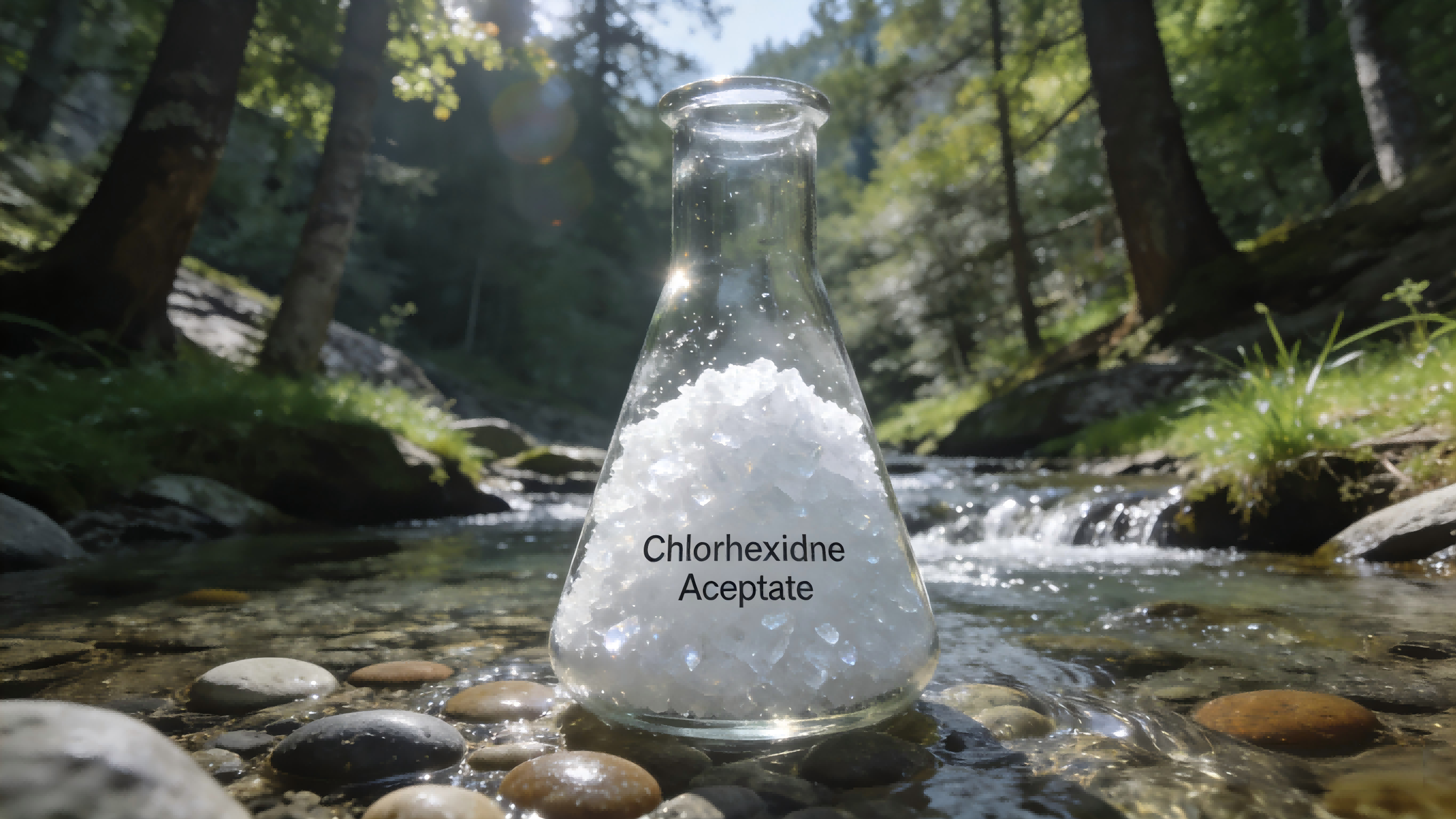
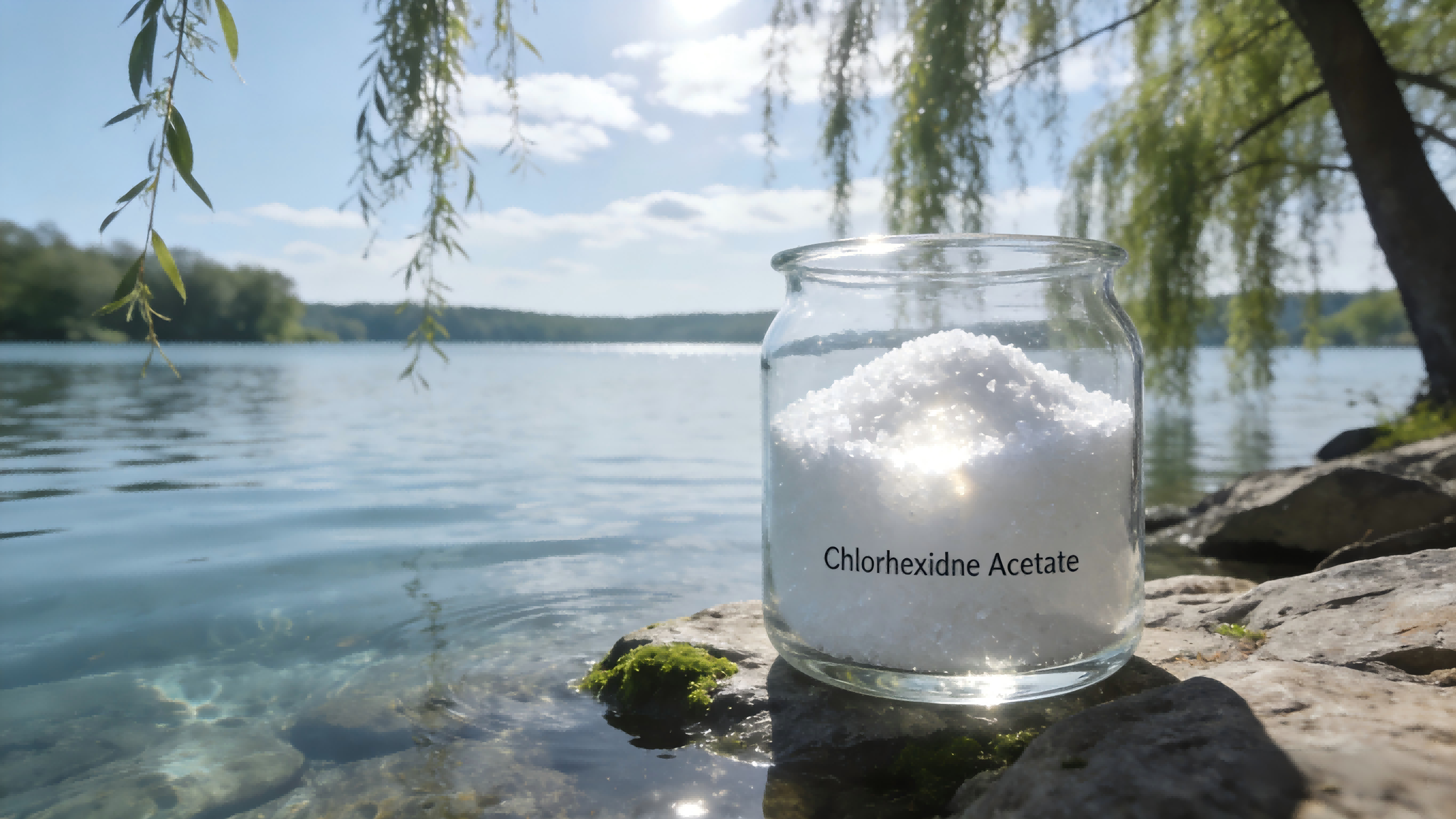
Chlorhexidine Acetate (CAS No.: 56-95-1), chemically known as 1,6-Bis(N¹-p-chlorophenyl-N⁵-diguanidino)hexane diacetate, has a molecular formula of C₂₂H₃₀Cl₂N₁₀·2C₂H₄O₂ and a molecular weight of 625.56. It appears as a white or off-white crystalline powder, odorless with a bitter taste. It is slightly soluble in cold water, readily soluble in hot water, ethanol, propylene glycol, and other solvents. Its aqueous solution is weakly acidic, with a pH value ranging from 5.0 to 7.0. As the acetate salt form of chlorhexidine, it offers superior advantages in liposolubility and stability compared with other derivatives (such as Chlorhexidine Gluconate). It also exhibits stronger antibacterial activity and lower irritation, making it suitable for disinfection and sterilization in diverse scenarios.
In terms of production process and quality control, high-grade Chlorhexidine Acetate is manufactured from raw materials including p-chloroaniline and guanidine hydrochloride through sophisticated processes such as condensation, salification, purification, crystallization, and drying. The product purity can reach over 98%, with impurity content strictly controlled below 0.5%. The entire production process complies with GMP standards, with no emission of harmful by-products. Advanced testing technologies such as High-Performance Liquid Chromatography (HPLC) are adopted to precisely control indicators including purity, acidity, heavy metals, and microorganisms, ensuring the quality stability and safety of each batch. The product fully meets the application standards for medical grade, food grade, cosmetic grade, and other levels. For storage, it should be sealed, kept away from light, and stored in a dry and cool place, avoiding contact with strong oxidizers and alkaline substances, to maintain long-term activity stability.
The core value of Chlorhexidine Acetate lies in its highly effective broad-spectrum antibacterial efficacy. Its mechanism of action mainly involves binding cationic groups to anionic sites on bacterial cell membranes, damaging membrane integrity and causing leakage of intracellular contents, leading to bacterial death. It also inhibits the activity of bacterial metabolic enzymes and prevents bacterial proliferation. It exerts potent killing and inhibitory effects on a wide range of pathogenic microorganisms, including Gram-positive bacteria, Gram-negative bacteria, fungi, mycoplasma, and chlamydia, with a low tendency to induce drug resistance and long-lasting antibacterial effects. Thanks to this core advantage, it is widely used in medical, cosmetic, animal husbandry, and other fields, enjoying extremely high market recognition.
In the medical and health field, Chlorhexidine Acetate is one of the core disinfection and sterilization raw materials, with applications covering multiple links such as preoperative skin disinfection, mucosal disinfection, wound disinfection, and medical device disinfection. For preoperative skin disinfection, its 0.5% alcoholic solution can rapidly kill pathogenic microorganisms on the skin surface, providing long-lasting disinfection with extremely low skin irritation, making it suitable for disinfecting skin around surgical incisions and injection sites. For mucosal disinfection, 0.05%-0.1% aqueous solutions can be used for disinfection of mucosal areas such as the oral cavity, vagina, and perianal region, assisting in the treatment of conditions including stomatitis, vaginitis, and perianal infections. For wound disinfection, it can be formulated into ointments, gels, and other dosage forms for the disinfection and care of burns, scalds, traumas, and other wounds, inhibiting bacterial growth and promoting wound healing. In addition, it can be used for the disinfection of medical devices, such as soaking surgical instruments, endoscopes, syringes, etc., to kill pathogenic microorganisms on device surfaces and reduce the risk of cross-infection.
In the personal care field, Chlorhexidine Acetate has become a core raw material for oral care, skin care, and other products by virtue of its mild antibacterial properties. For oral care, solutions at a concentration of 0.12%-0.2% can be made into mouthwashes and oral rinses, effectively killing pathogenic bacteria such as streptococci and staphylococci in the oral cavity, preventing oral diseases including gingivitis, periodontitis, and oral ulcers, and freshening breath. For skin care, it can be added to hand sanitizers, body washes, antibacterial soaps, wet wipes, and other products to inhibit harmful bacteria on the skin surface and prevent skin infections, acne, and other problems, making it particularly suitable for people with oily and acne-prone skin. Meanwhile, its mild and non-irritating properties also make it suitable for infant care products, such as antibacterial wet wipes and diaper creams, providing safe antibacterial protection for infants’ delicate skin.
In the animal husbandry field, Chlorhexidine Acetate is an important raw material for animal epidemic prevention, applicable to body surface disinfection, environmental disinfection, drinking water disinfection, and other aspects for livestock and poultry. For body surface disinfection, it can be prepared into sprays, solutions, and other dosage forms to disinfect the skin, feathers, hooves, etc., of livestock and poultry, preventing skin infections, hoof inflammation, and other diseases. For environmental disinfection, it can be used to disinfect pens, sites, equipment, and other facilities in farms, killing pathogenic microorganisms in the environment and cutting off the transmission routes of epidemics. For drinking water disinfection, low-concentration (0.002%-0.005%) aqueous solutions can be added to livestock and poultry drinking water to inhibit bacterial reproduction, ensure drinking water safety, enhance the immunity of livestock and poultry, and reduce the incidence of epidemics. Its application in animal husbandry not only effectively prevents and controls epidemics but also reduces the use of antibiotics, ensuring the quality and safety of livestock and poultry products.
Chlorhexidine Acetate are now available for purchase at Xi’an Biof -Technology Co., Ltd. For more information , visit https://www.biofingredients.com.
XI'AN BIOF BIO-TECHNOLOGY CO.,LTD
Email: Tom@xabiof.com
Tel/WhatsApp: +86-15091533695
Website: https://www.biofingredients.com
Post time: Jan-29-2026


